
Concrete Repair in Goodyear, AZ: What to Know Before You Call Someone
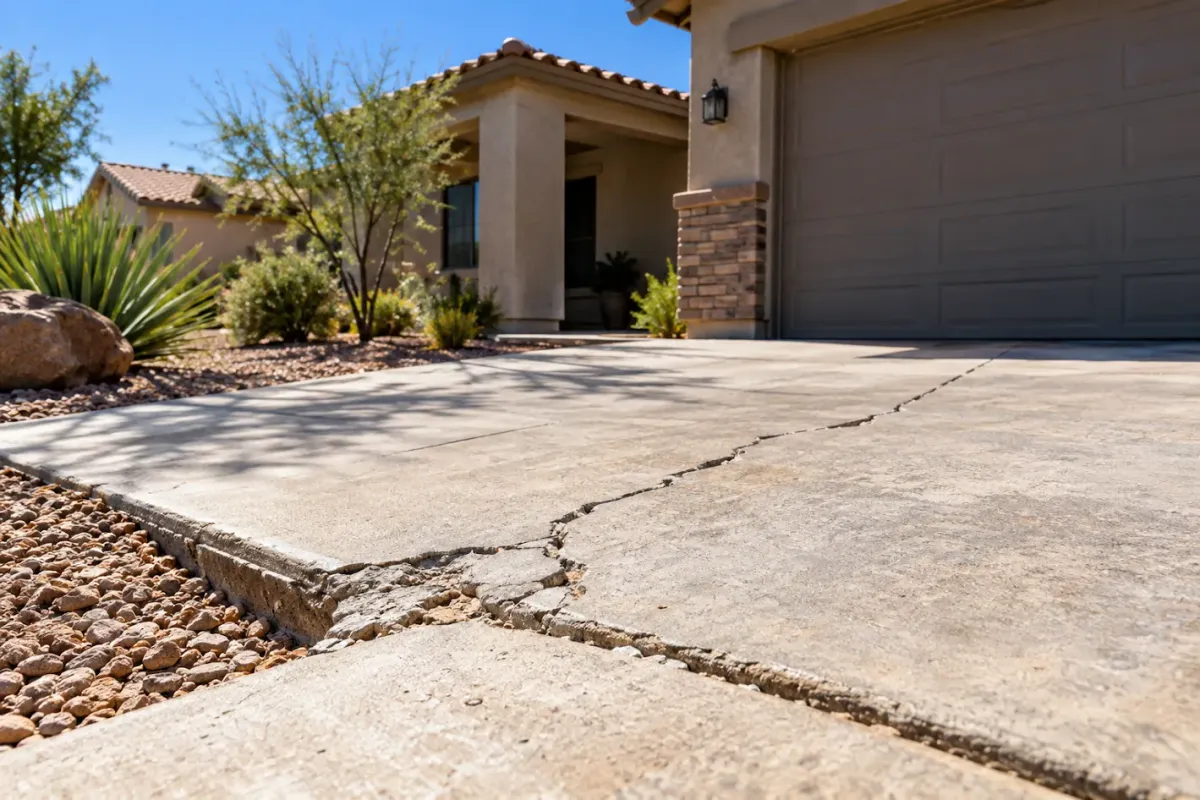
Drive through Estrella Mountain Ranch or Pebble Creek on a summer afternoon and you can watch a driveway apron shimmer in the heat. That same heat is why so much of the concrete around Goodyear starts cracking, chipping, or settling years before it should.
Homeowners across Palm Valley, Buckeye, and the rest of the West Valley searching for concrete repair near me are usually standing over a specific problem, a crack that's gotten wider since last summer, a corner of the patio that's started to crumble, a driveway seam that never quite looks even after monsoon season, and trying to figure out if it's a fifteen-minute fix or something bigger.
Most concrete damage in this part of Arizona falls into two buckets. Hairline cracks and surface wear caused by heat cycling and sun exposure are usually a straightforward repair. Cracks that run through the full depth of the slab, spread across more than half the surface, or keep coming back after a patch almost always point to a problem underneath, soil movement or drainage, that has to be addressed or the repair won't hold. Getting that distinction right before any concrete repair starts is what separates a fix that lasts from one you're paying for again in two years.
What's actually happening under that crack
The West Valley doesn't get freeze-thaw damage the way concrete does in colder climates, but triple-digit summer heat puts a different kind of stress on a slab. Concrete expands as it heats through the day and contracts overnight, and that daily cycle, repeated for years, is enough to open hairline cracks and chip away at edges and control joints. Add in monsoon storms that dump heavy rain in a short window, and any spot where water pools instead of draining away starts eroding the base underneath the slab.
Between the long dry stretches and the sudden soaking from a monsoon storm, the soil under a Goodyear driveway or patio expands and contracts too, and that movement is what shows up on the surface as a crack that keeps growing instead of staying put.
Repair or replace: how to tell the difference
A crack under about a quarter inch wide that's cosmetic, meaning it hasn't affected how the slab sits or drains, is usually a good candidate for repair. So is isolated spalling (surface chipping and flaking) that hasn't spread past a small section. On the other end, cracks wider than about half an inch, cracks that run all the way through the slab, or damage that covers more than half the surface area are usually signs that repair will be a temporary patch on a bigger problem.
The other question worth asking is whether the crack has a clear cause that's already been dealt with. A crack from a one-time event, like a heavy delivery truck parked in the wrong spot, is a different situation than a crack that's part of an ongoing drainage or soil issue that will keep pushing the slab around no matter how many times it gets patched.
What a proper repair actually involves
The difference between a repair that lasts and one that fails again within a year almost always comes down to prep work most homeowners never see. Cutting out and cleaning the damaged area, using a bonding agent so new material actually adheres to the old slab instead of sitting on top of it, and matching the repair method to the type of damage (patching compounds for surface-level chipping, epoxy or polyurethane injection for structural cracks, resurfacing for wider areas of wear) all matter more than which brand of product ends up in the crack. A patch applied straight onto a dusty, unprepped surface may look fine for a few months and then pop loose the first time the slab goes through a full summer heat cycle.
Signs it may be time to get it looked at
A crack that's visibly wider or longer than it was a year ago
Chipping or flaking concrete (spalling) along an edge, corner, or control joint
A section of patio or walkway that's settled unevenly and created a trip hazard
Water pooling in the same spot after every monsoon storm instead of draining
A previous patch or filler that's already failed or come loose
Fading, peeling sealer, or a rough, pitted surface on decorative or stamped concrete
What determines whether it's a quick fix or a bigger job
Factor | Points toward a lighter repair | Points toward a bigger job |
Crack width | Hairline to about ¼ inch | Wider than ½ inch |
Crack depth | Surface-level, doesn't go through the slab | Runs the full depth of the slab |
Area affected | Isolated to one section | Spread across most of the surface |
Cause | One-time event, already resolved | Ongoing drainage or soil movement |
Location | Walkway, patio, non-structural area | Driveway apron or load-bearing area with repeated vehicle weight |
Because every driveway, patio, and walkway around Goodyear has a different history of sun exposure, drainage, and soil, the only way to know which side of that table a specific crack falls on is to have it looked at in person. That's also the point where cost comes in. The size of the repair, how much surface prep it needs, and whether the underlying cause has to be addressed first all affect the price, and none of that can be estimated accurately from a description over the phone. A free on-site quote is the more reliable way to get an actual number.
What to ask before you book anyone for concrete repair
Are you licensed, bonded, and insured, and can you confirm that in writing?
What does your surface prep involve before the patch or resurfacing goes down?
Will this repair address the cause (drainage, soil movement, load) or just the visible crack?
What's covered if the repair doesn't hold, and for how long?
Can I see examples of similar repair work you've done in the area?
A word on trust
It's a fair question, and one that comes up constantly in local homeowner forums: how do you tell a contractor who'll do the prep work right from someone who'll patch over the surface and be gone before it fails? There's no shortcut around it. Asking directly about surface preparation, getting the scope of work in writing before anything starts, and confirming licensing and insurance up front will filter out most of the risk. A contractor who's reluctant to answer those questions plainly is worth a second look before you book anything.
Frequently asked questions
Can damaged concrete actually be repaired, or does it usually need to be replaced?
It depends on the extent and cause of the damage. Cosmetic cracks and isolated spalling are usually repairable. Cracks that run through the full slab, cover a large portion of the surface, or keep returning after a patch are usually a sign that replacement will hold up better long-term than another repair.
Does new patching material actually bond to old concrete?
Yes, when the surface is properly prepped first. Cutting out the damaged area, cleaning it thoroughly, and applying a bonding agent before the new material goes in is what makes the repair adhere. Skipping that prep is the most common reason a patch fails.
Can a general handyman do concrete repair, or do I need a specialized contractor?
A handyman can sometimes handle very minor cosmetic patching, but structural cracks, spalling, and anything involving the slab's base or drainage are better handled by a contractor who works with concrete specifically and can diagnose the underlying cause, not just fill the gap.
How much does concrete repair cost?
It depends on the size of the damaged area, how much surface prep it needs, and whether an underlying issue like drainage or soil movement has to be addressed before the repair will hold. Because those factors vary so much from one driveway or patio to the next, an accurate number comes from an on-site look rather than a general estimate.
Get a second opinion on that crack
Intricate Concrete has been repairing and installing residential concrete across Goodyear, Buckeye, Peoria, Waddell, Surprise, Sun City, and Glendale, working with the same heat cycling, monsoon drainage, and soil movement described above on every job.
If you're trying to figure out whether that crack in your driveway or patio needs a repair or something more, a free on-site quote is the fastest way to get a straight answer instead of guessing. You can also read more on why West Valley heat and soil are hard on concrete or how to tell repair from replacement in more detail.
For a straightforward concrete repair near me search to turn into an actual fix, reach out to the team and they'll take a look.