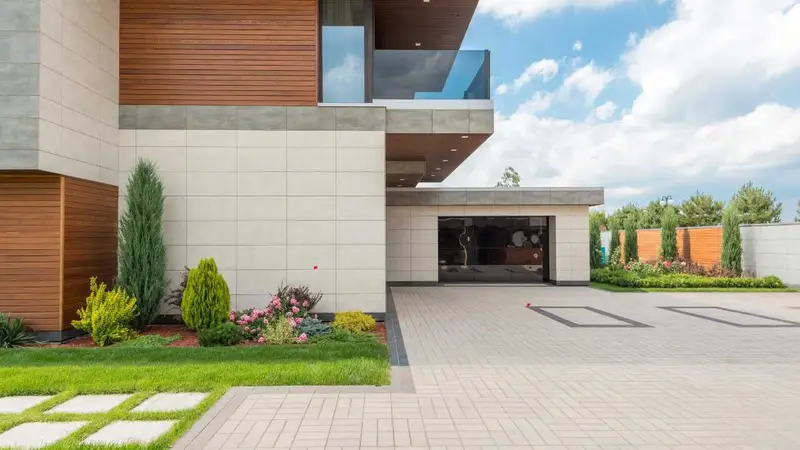
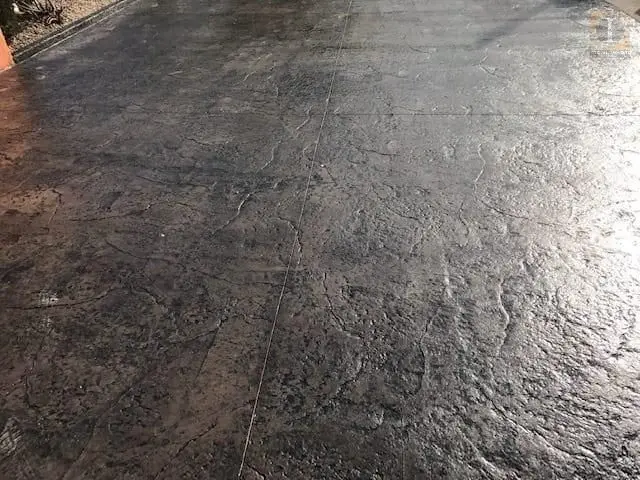
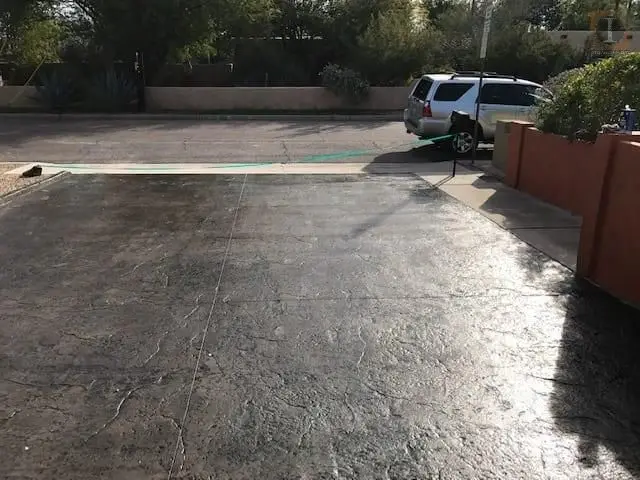
Stained concrete by Intricate Concrete in the Goodyear, Arizona area

Concrete Staining in Goodyear, AZ

Stained concrete patios, floors, walkways and driveways, with translucent color that keeps the character of the concrete underneath.

Color That Becomes Part of the Concrete

Concrete staining adds color to new or existing concrete by working it into the surface, then sealing it. Intricate Concrete stains patios, walkways, entries, driveways and indoor floors in Goodyear and nearby West Valley cities.

Stain is not paint. Paint forms a layer on top that can chip and peel. Stain soaks in or reacts with the concrete, so the color becomes part of the surface and keeps the concrete's own texture and natural variation. That is why stained concrete looks rich and layered rather than flat, and why it is one of the simplest ways to change how sound, existing concrete looks without tearing it out.

Acid Stain vs Water-Based Stain

There are two main families of concrete stain. They produce different looks, and the right one depends on the effect you want and the concrete you have.

Acid stain

Acid stains, also called reactive stains, contain metallic salts that react chemically with the lime in concrete. The reaction creates mottled, variegated color in earthy tones such as browns, tans and amber, with natural movement that resembles stone or leather. Because the color comes from a reaction, every slab takes it a little differently, and the residue is neutralized and rinsed away before sealing.

Water-based stain

Water-based stains carry pigment into the pores of the concrete without a chemical reaction. They offer a much wider range of colors, from soft neutrals to deeper and brighter tones, and give more uniform, predictable results. They are a good choice when a specific color matters or when the concrete does not react well to acid stain.

Both types are translucent, so the base color and condition of the concrete always show through. Testing a small area first is the most reliable way to see how your concrete will take a stain.

Choosing Concrete Stain Colors

Stain colors look different on concrete than they do on a chart. A few things are worth knowing before you choose.

If you are torn between two or three colors, narrow it down by where the surface is and how much sun it gets, then compare samples on your own concrete in the light it will be seen in. Morning and late-afternoon light can make the same stain look quite different.

For more inspiration, see our ideas for colored concrete and stained concrete in living rooms, kitchens and patios.

  • Earth tones suit desert homes. Browns, tans, amber and terra cotta sit naturally next to stucco, stone and desert landscaping, and they hide dust well.
  • Grays and charcoals read modern. Cooler tones pair with contemporary homes and darker trim, and work well indoors.
  • The concrete changes the color. Stain is translucent, so the same color looks lighter on pale concrete and deeper on darker concrete.
  • Sealer deepens the color. Most sealers darken and enrich stain, so the finished surface is usually richer than it looks before sealing.
  • Sun matters outdoors. Darker colors absorb more heat underfoot, which is worth considering on patios that take full afternoon sun.
  • Variation is the point. Stained concrete is not meant to look like a uniform coat of paint. Some movement in the color is part of its character.

Stained Concrete Patios, Floors and Driveways

Staining works on most sound concrete around the home. Each area has its own considerations.

Patios and walkways

Stained concrete patios bring warmth to a backyard without the cost or upkeep of tile or pavers. Outdoors, the sealer protects the color from sun and water, and a slip-resistant additive helps footing when the surface is wet. Deciding between finishes? Compare stamped and stained patios.

Indoor floors

Stained concrete floors are protected from sun and weather, so color stays truer and the sealer can be chosen for the look you want, from matte to glossy. They suit living areas, kitchens and casitas where a durable, easy-clean floor is the goal.

Driveways

A stained concrete driveway can lift the look of a home from the street. Driveways take tire traffic, oil drips and sun, so the sealer and how it is maintained matter more here than anywhere else.

Entries and front walks

A stained entry or front walk is a small area with a big effect on curb appeal, and it can be coordinated with the colors of the house, the door and the landscaping.

How Concrete Staining Is Done

Most of the result is decided before any stain is applied. These are the steps a staining project follows.

  1. Assess the concrete

    The slab is checked for cracks, patches, old sealers, paint and coatings, all of which affect how stain is absorbed.

  2. Clean and prepare

    Dirt, oil and any old sealer or coating are removed so the stain can reach bare concrete.

  3. Test the color

    A small test area shows how this particular concrete takes the stain before the whole surface is done.

  4. Apply the stain

    Stain is applied, sometimes in more than one coat or color, to build the depth and variation you want.

  5. Neutralize and rinse

    With acid stains, the residue is neutralized and rinsed away so the sealer bonds properly.

  6. SeAl

    A sealer locks in and protects the color. Want to compare doing it yourself? See our DIY vs professional staining guide.

Sealing and Caring for Stained Concrete

The stain provides the color. The sealer protects it. Looking after the sealer is what keeps stained concrete looking rich.

Choosing a sealer finish

Concrete stain sealers range from matte to satin to high gloss. Higher gloss deepens color the most but shows scratches and can be slicker when wet. Outdoors, a lower sheen with a slip-resistant additive is usually the practical choice. Indoors, there is more freedom to choose a shine.

Keeping it looking new

Sweep regularly and clean with water and a mild cleaner. Avoid harsh chemicals that can dull the sealer. Outdoor surfaces in the West Valley take strong sun year-round, so the sealer wears faster there and is refreshed as it starts to look dull or chalky. Resealing renews the color without restaining.

Homes and concrete in the Goodyear, Arizona area

Why Is It Called Goodyear, Arizona?

Goodyear is named after the Goodyear Tire and Rubber Company. According to the City of Goodyear, the land was part of 16,000 acres bought in 1917 for the company by executive Paul Litchfield to grow cotton for tires, which was in short supply during World War I.

Residents chose the name Goodyear in 1944, and the town was incorporated in 1946. The cotton fields have long since given way to neighborhoods, but the desert setting is the same, which is why warm earth-tone stains in browns, tans and amber are such a natural fit for Goodyear homes.

We provide concrete staining in Goodyear and in Buckeye, Peoria, Waddell, Surprise, Sun City and Glendale.

Concrete project by Intricate Concrete

Our Other Concrete Services

If your concrete needs more than new color, these services cover new pours, coatings and repairs.

View all concrete services

Concrete Staining Questions

Wondering if your concrete can be stained? Call (623) 255-0104.

What is concrete staining?

Concrete staining is a way of adding color to new or existing concrete by applying a stain that penetrates or reacts with the surface, then sealing it. The result is translucent, variegated color that keeps the texture of the concrete underneath, unlike paint, which forms a film on top.

Can old concrete be stained?

Often, yes, as long as the concrete is structurally sound and not covered by a sealer, paint or coating that would block the stain. Older concrete may need more cleaning and preparation first. Our article on whether old concrete can be stained successfully goes into the details.

What is the difference between acid stain and water-based stain?

Acid stains react chemically with the concrete to create mottled, earthy tones that vary across the surface. Water-based stains deposit pigment into the surface without a chemical reaction, offering a wider range of colors and more uniform, predictable results.

Does staining hide cracks in concrete?

No. Stain is translucent, so cracks, patches and existing stains usually remain visible and can even darken. Concrete is checked for condition before staining, and if it is cracked or uneven, other options may fit better.

Is stained concrete slippery?

Sealed concrete can be slicker than bare concrete, especially when wet. On outdoor areas such as patios and walkways, a slip-resistant additive can be mixed into the sealer to improve footing.

Do you stain concrete outside Goodyear?

Yes. Intricate Concrete provides concrete staining in Goodyear and in Buckeye, Peoria, Waddell, Surprise, Sun City and Glendale.

Planning a Concrete Project?

Call Tim directly or send the form with a few details. Photos of the area and rough measurements help.

(623) 255-0104

Intricate Concrete
16179 W Yavapai St, Goodyear, AZ 85338

Request a quote

Loading the quote form